What affects CCTV installation costs?
The total cost of a CCTV system is more than the camera price. A fair comparison should account for recording equipment, storage, cabling, installation labour, configuration and the amount of usable coverage required at the property.
1. Number of cameras
More cameras generally increase equipment, cabling and installation costs. Typical system sizes may include:
- 4-camera systems for smaller properties or limited coverage areas.
- 8-camera systems for homes and small business premises with more entry points.
- 16-camera systems or larger for offices, warehouses and multi-zone coverage.
2. Camera resolution and features
Common resolution options include 2MP (1080p), 4MP and 8MP (4K). Higher resolution can provide more image detail, but it may also increase storage and network requirements. Actual identification quality depends on lens choice, lighting, placement, compression and recording settings—not resolution alone.
Smart detection features vary by model. For example, some cameras can classify people or vehicles to help filter events, while Hikvision ColorVu is associated with colour imaging in low-light conditions. Confirm the exact capabilities of the selected camera and recorder rather than assuming every model supports the same functions.
3. Recording and storage duration
Decide how long footage should be retained before choosing the recorder and hard drive. Longer retention typically requires more storage, especially when using more cameras, higher bitrates or continuous 24/7 recording.
- 30 days of recording may suit some common residential or business requirements.
- 60 or 90 days may require substantially more storage and a higher budget.
- Motion-triggered recording, frame rate, resolution and compression can change storage needs.
These are examples, not universal recommendations. Calculate the storage based on the number of cameras, recording mode, bitrate and desired retention period.
4. Cabling and installation complexity
Installation costs can rise when the site requires concealed cabling, long cable runs, difficult ceiling access, elevated work, metal trunking, after-hours installation or additional network infrastructure. Building management requirements and restrictions on drilling or work hours may also affect scheduling and scope.
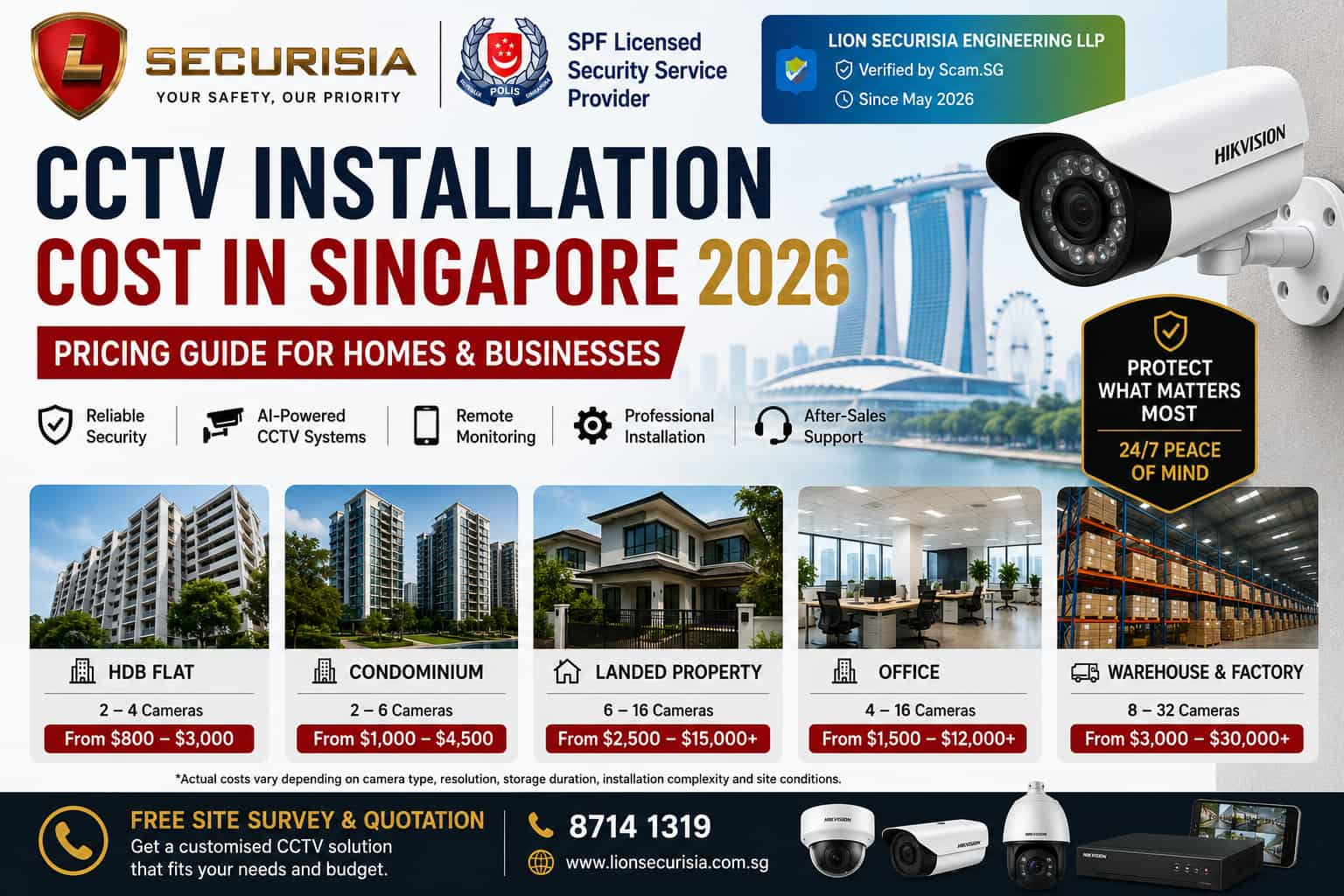
Indicative CCTV installation budgets in Singapore (2026)
The ranges below are broad planning estimates retained from this guide. They are not a live price list and should not be interpreted as a guaranteed quote or independently verified industry average.
| Property type | Typical camera quantity | Indicative budget (SGD) |
|---|---|---|
| HDB flat | 2–4 cameras | S$800–S$3,000 |
| Condominium | 2–6 cameras | S$1,000–S$4,500 |
| Landed property | 6–16 cameras | S$2,500–S$15,000+ |
| Office | 4–16 cameras | S$1,500–S$12,000+ |
| Warehouse or factory | 8–32 cameras | S$3,000–S$30,000+ |
Important: These estimates reflect different possible project scopes. The lowest figure may not include the same equipment, storage, cabling method, warranty or site conditions as the highest. Request an itemised quotation so you can compare like for like.
Wired PoE vs wireless CCTV: which offers better value?
Wired PoE systems are often a strong option for permanent installations that need multiple cameras and centralised recording, because camera data and compatible PoE power can run over the same Ethernet cable. However, cabling and installation labour affect the initial cost.
Wi-Fi cameras can be practical for smaller setups or locations where network cabling is difficult. They still need a power source or battery management, and recording during a Wi-Fi outage depends on whether the specific model supports local recording and how it is configured.
- Consider wired PoE for fixed multi-camera coverage and centralised NVR recording.
- Consider Wi-Fi where flexible placement or reduced data cabling is important and the signal is reliable.
- Consider a mixed design when some locations are easy to wire and others are not, after checking recorder and software compatibility.
Should you choose AI CCTV cameras?
Smart detection can help prioritise events and reduce irrelevant alerts when the chosen models are configured for the intended scene. Before paying for AI features, identify what the system needs to detect, such as people or vehicles, and check compatibility between the camera, recorder and app. Detection accuracy depends on model capability, placement, lighting and scene conditions.
Hidden costs to check before accepting a quotation
Ask the installer to state clearly whether the quotation includes:
- Camera units, recorder and surveillance-grade hard drive.
- Cabling, trunking, conduit, connectors and other installation materials.
- Installation labour, mounting, configuration and mobile viewing setup.
- Additional works for high ceilings, concealed cabling, restricted access or night installation.
- Warranty duration, exclusions and any future service or maintenance charges.
The lowest headline price is not always the lowest total cost. Compare the equipment models, recording capacity, cabling scope and warranty terms as well as the total amount.
Why site assessment matters
A site assessment helps identify the areas that need coverage, potential blind spots, suitable mounting positions, lighting conditions, cable routes and recorder location. It can also reveal whether the existing network or electrical arrangement needs changes. This makes the recommendation more specific than choosing camera quantity based only on property size.
CCTV installation for homes and businesses in Singapore
Lion Securisia Engineering provides CCTV installation and related security-system services for residential and commercial premises in Singapore. The suitable design depends on the property's layout, required camera views, storage duration, cabling requirements and operating conditions.
To help scope a quotation, prepare your property type, approximate number of cameras, preferred recording duration, floor plan or site photos, and any restrictions on installation hours or cabling. These details help clarify the work involved before comparing quotes.
Frequently asked questions
What is the starting cost of CCTV installation for an HDB flat?
This guide uses an indicative budget of S$800–S$3,000 for a 2–4 camera HDB setup. The final price depends on the camera models, recording equipment, cabling method, storage capacity and site requirements. Ask for an itemised quote based on your flat.
How much does CCTV installation cost for an office in Singapore?
The indicative range in this guide is S$1,500–S$12,000+ for an office with about 4–16 cameras. Larger spaces, higher installation points, longer retention, AI features and after-hours work can change the scope and cost.
How many days of CCTV footage should I keep?
It depends on your security purpose, incident review needs, available storage and any applicable organisational requirements. Choose the retention period first, then size the hard drive for the number of cameras and recording settings. Longer retention generally costs more.
Is wired CCTV always better than Wi-Fi CCTV?
No single option is best in every situation. Wired PoE is often suitable for permanent systems with several cameras and centralised recording. Wi-Fi cameras can suit smaller or hard-to-wire areas, provided signal quality, power and recording behaviour meet the requirements.
What should I send to get a more accurate CCTV quotation?
Share the property type, floor plan or site photos, desired camera count, areas that need coverage, recording duration and whether concealed cabling or after-hours work is required. Confirm equipment models, storage, cabling scope and warranty in the final quotation.
Need a CCTV installation quotation?
Tell us whether the project is for an HDB flat, condominium, landed property, office or warehouse. A floor plan, site photos and your expected recording duration can help define the scope.
Pricing note: All figures above are indicative estimates for early budgeting, not a binding offer. Confirm the current equipment, scope, taxes if applicable, warranty and installation conditions in a written quotation before ordering.