Why CCTV blind spots matter
A blind spot is an area that a camera cannot see, or where the recorded image does not show enough useful detail. A camera may appear to cover a corridor or shop floor on the monitor, yet the view may be blocked, too wide, poorly lit or aimed at the wrong angle. This can make an incident difficult to review afterwards.
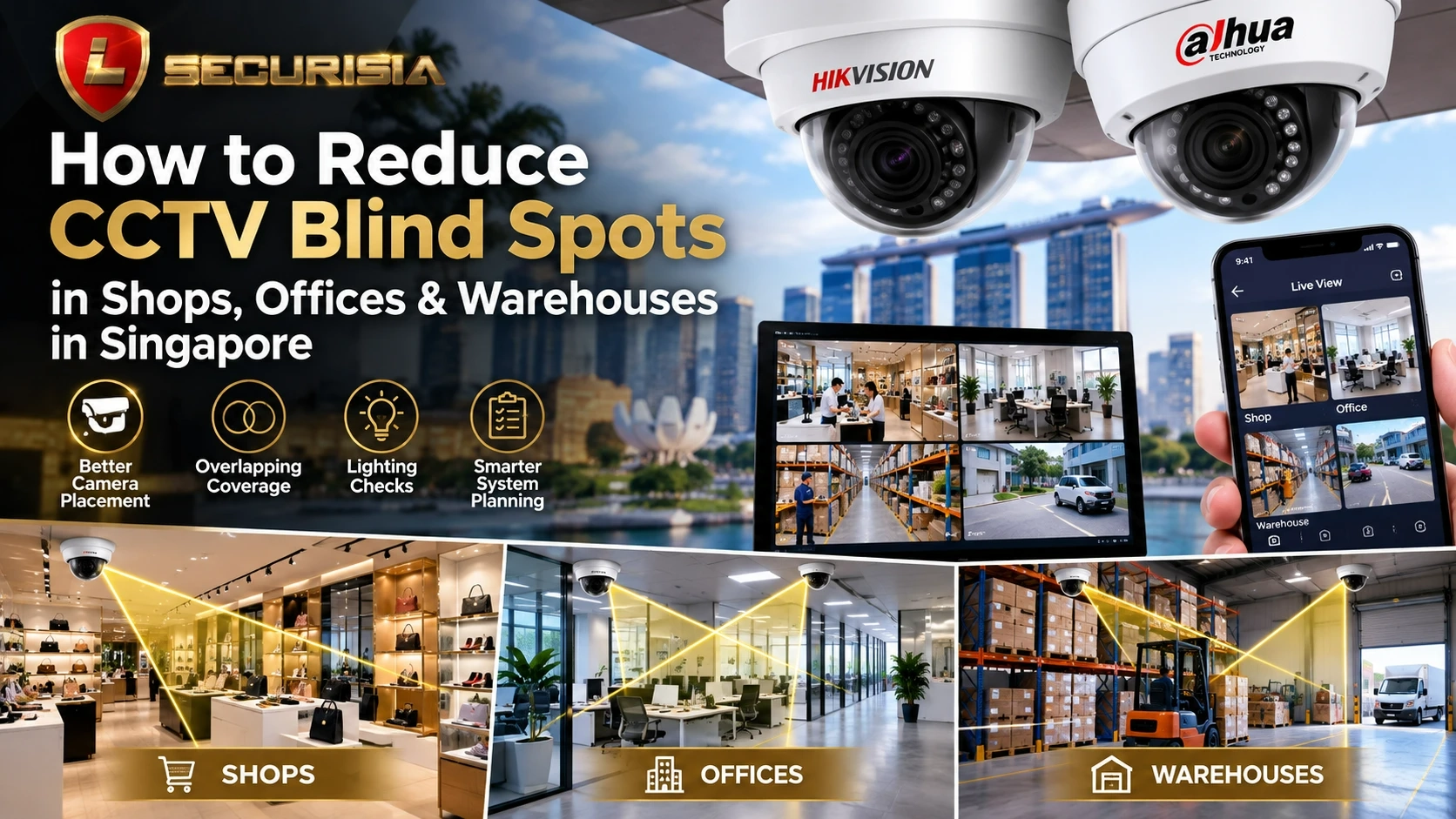
In Singapore, retail shops may have blocked sightlines around shelving, promotional stands and cashier counters. Offices can have gaps at reception areas, side entrances, corridors and restricted-room doors. Warehouses may have changing blind spots as racks, pallets, forklifts and stored goods move around.
Common causes of CCTV blind spots
- Too wide a field of view: one camera is expected to monitor a large area, leaving important people or objects too small in the recorded image.
- Poor mounting angle: a camera points mainly at the floor, misses faces at entry points or leaves part of a doorway hidden.
- Physical obstructions: shelves, pillars, signs, partitions, doors or stacked stock block the view.
- Changing lighting: bright windows, glare, shadows or low light reduce usable detail at certain times of day.
- No review of recorded footage: a live preview looks acceptable, but playback reveals motion blur, glare, poor night visibility or insufficient detail.
- System changes: a renovated counter, new rack or relocated storage area changes the original camera sightline.
A practical 5-step blind-spot audit
- Map the important zones. Mark entrances, exits, cashier and payment points, stock rooms, loading areas, access-controlled doors and other locations where an incident would matter most.
- Walk the site from the camera’s point of view. Check whether shelves, walls, open doors, columns or equipment conceal the areas you intend to monitor. Do not assess coverage only from a floor plan.
- Check the required level of detail. Decide whether the purpose is general observation, following movement, or seeing detail at a particular point. A wide overview may not provide enough detail for every task.
- Test different conditions. Review live and recorded footage during daytime, after dark and under typical operating lighting. Include normal door positions and realistic stock or equipment placement.
- Adjust and retest. Change camera direction, height, lens or position where appropriate. Add another camera only where a remaining coverage gap justifies it, then verify the recording again.
Where should business CCTV coverage be prioritised?
Prioritise areas according to operational risk, traffic flow and the type of incident you need to review. The locations below are starting points for a site assessment, not a fixed camera-count formula.
| Business area | What to check | Possible coverage approach |
|---|---|---|
| Retail entrance and cashier | Doorway visibility, faces, payment activity, display or queue obstructions | Use a suitable entrance view and a separate close-detail view where required. |
| Office reception and corridors | Entry routes, door swings, corridor intersections and restricted rooms | Position cameras to see people approaching key doors; check that open doors do not block the view. |
| Warehouse aisles and racks | High shelving, moving pallets, forklift routes and changing stock levels | Combine general area observation with targeted views at loading, stock-access or entry points. |
| Side and rear entrances | Low-light conditions, external glare, doors left open and approach direction | Test image quality under actual lighting and ensure the approach to the entrance remains visible. |
When are overlapping camera views worthwhile?
Overlapping views can help at higher-risk points where one object, person or open door could otherwise hide activity from a single camera. Examples may include a loading entrance, a stock-access door or a busy cashier area. The goal is not to duplicate every view; it is to reduce consequential gaps and give the operator enough context to interpret what happened.
More cameras also mean more cabling, storage, network capacity and footage to review. A well-planned layout balances overview coverage and detail coverage instead of adding devices without identifying the problem first.
Do not overlook lighting and recording quality
Camera placement is only one part of the result. Backlighting from glass doors, reflections, dark corners, night lighting and motion can affect how useful footage is. Check the recording itself at the time and location where you need the detail, not just the live preview. Confirm that the recorder is saving footage correctly and that the required cameras are recording at the expected settings.
Consider privacy and the area being recorded
Plan views around a defined security purpose and avoid capturing unnecessary areas where practical. If a camera may record areas beyond the business premises, review whether the scope of coverage is reasonable for that purpose and consider applicable personal-data obligations and notification practices. See the Personal Data Protection Commission’s advisory guidelines for more information. This article is general information, not legal advice.
Why a site assessment helps
A site assessment connects the layout on paper with real conditions: camera height, mounting options, cable routes, lighting, obstructions and day-to-day movement. It can also identify when repositioning or adjusting an existing camera may be more appropriate than adding new hardware. For multi-camera retail, office and warehouse installations, this helps the final layout reflect the site’s actual coverage requirements.
Frequently asked questions
How can I tell whether my existing CCTV system has blind spots?
Review the live feeds and recorded playback while walking through entrances, corridors, cashier points and stock areas. Check whether doors, shelves or equipment block the view and whether the image contains enough detail for the intended use. Repeat the check in different lighting conditions.
Do I need to install more cameras to remove blind spots?
Not always. Repositioning a camera, changing its angle or using a more suitable lens may improve coverage. Additional cameras may be appropriate where a critical area remains hidden or where one view cannot provide both general context and the detail needed.
Is overlapping CCTV coverage necessary?
It is most useful at selected higher-risk points where one obstruction or viewing angle could hide important activity. It is not necessary to duplicate every camera view; design the overlap around the risks and evidence the business needs to capture.
Should CCTV be checked after a shop or warehouse layout changes?
Yes. New shelving, stock locations, partitions, counters or equipment can create new obstructions. Recheck the camera views after changes and review recorded footage to confirm that coverage is still useful.
Key takeaway
To reduce CCTV blind spots in Singapore business premises, begin with the areas that matter most, inspect real sightlines, check lighting and playback, then adjust or add cameras based on verified gaps. The best layout is the one that provides usable coverage for the actual site—not simply the one with the most cameras.
Lion Securisia Engineering provides CCTV installation and coverage planning for business premises in Singapore. Share your floor plan, site photos or current camera layout to start a practical discussion about areas that may need improvement.
Need to review your CCTV coverage?
Tell us whether the site is a retail shop, office or warehouse and which areas are difficult to see clearly. A floor plan or current camera screenshots can help start the assessment.