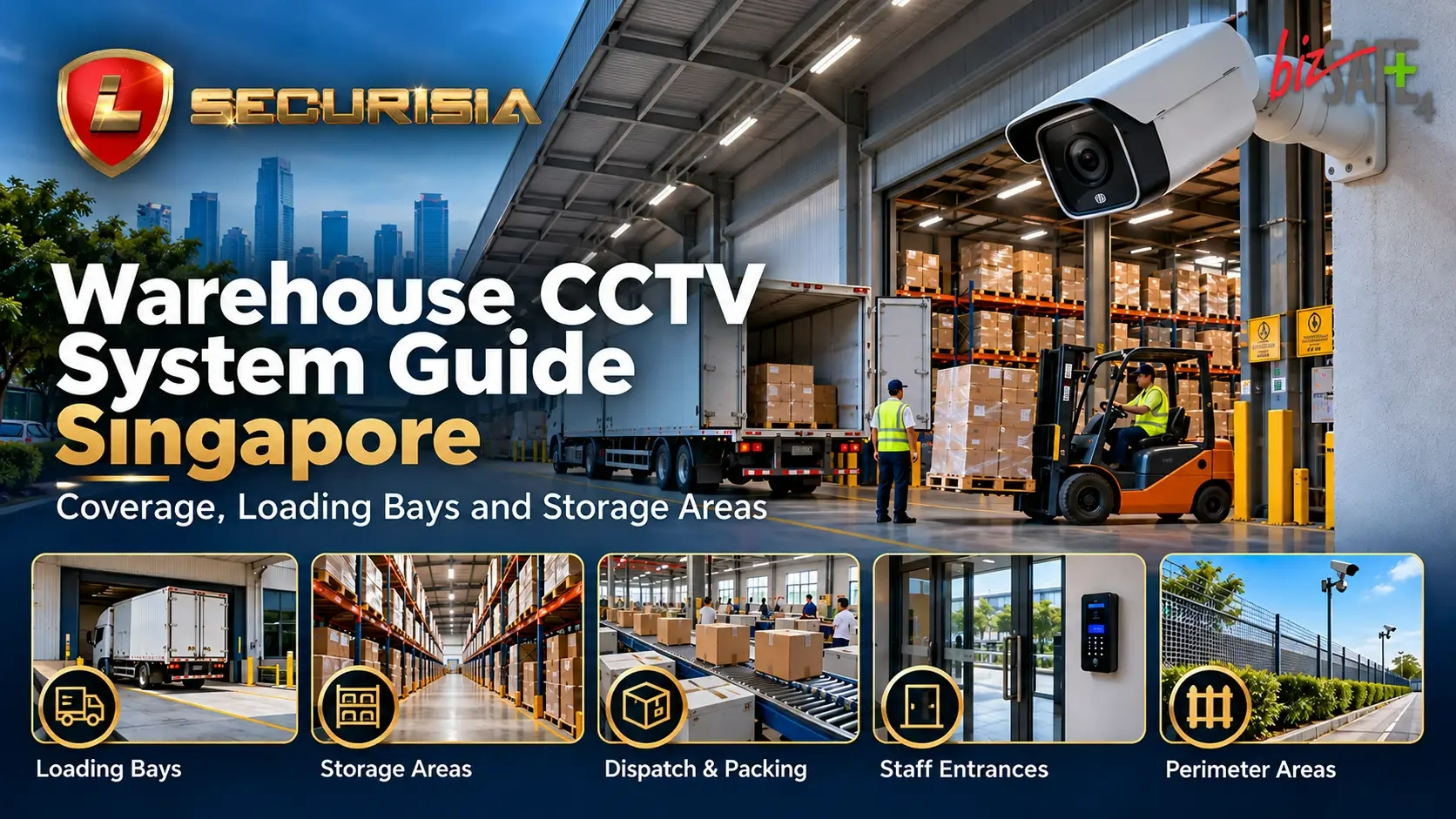
This guide focuses on practical warehouse CCTV design decisions that can improve visibility, accountability and incident review. It is a planning guide; a site assessment is needed to determine the appropriate number and positioning of cameras for an individual facility.
1. Start with workflow, not just floor size
A large warehouse may look simple on a floor plan, but security risks often follow the movement of goods, people and vehicles. Deliveries enter through loading bays, staff and contractors use selected doors, vehicles travel through designated lanes, and inventory is handled in repeated work zones.
Plan camera coverage around those processes as well as the building layout. Identify where goods are received, checked, stored, packed and dispatched, then mark the access points and handover locations where footage could help clarify an incident.
2. Priority areas for warehouse CCTV
- Loading bays and delivery handover points: review vehicle arrivals, loading activity and the transfer of goods.
- Staff and contractor entrances: monitor relevant entry and exit activity while considering visitor procedures.
- High-value storage areas: focus on access to restricted cages, equipment rooms or selected inventory zones.
- Dispatch tables and packing lines: help review the handling and movement of goods.
- Storage aisles: assess whether shelves or stacked stock block the view through the aisle.
- External perimeter and side entrances: review approach routes and after-hours activity within the site's boundaries.
3. Match camera coverage to each warehouse zone
| Area | What footage should help review | Planning consideration |
|---|---|---|
| Loading bays | Deliveries, handovers and vehicle movements | Consider an overview plus a focused view where detail is needed. |
| Storage aisles | Movement through racks and access to stock | Check rack height, aisle width, lighting and changing obstructions. |
| Dispatch and packing | Goods handling, packing and transfer activity | Position views around relevant work points without leaving avoidable blind areas. |
| Staff entrances | Entry and exit activity | Check approach angle, lighting and door position. |
| External perimeter | Movement around loading areas and side doors | Assess low-light conditions and keep coverage focused on relevant site areas. |
4. Give loading bays careful attention
Loading bays are busy and operationally important. Useful footage may help a team review delivery timing, vehicle approaches, goods transfers or a disagreement about damaged or missing items. A single wide-angle view may not show both the overall scene and the details required to understand a handover.
Depending on the bay layout, consider whether separate views are needed for vehicle approach, the dock position and the goods transfer area. Test actual recorded footage at different times of day and ensure doors, vehicles or equipment do not routinely block the intended view.
5. Balance overview and detail in storage aisles
Cameras positioned only at aisle ends can leave sections obscured by tall racks, stacked pallets or stock. Review the line of sight from the planned mounting position and consider the level of detail needed at higher-risk sections. A wide overview is useful for context, but may not provide enough detail for every incident review.
Warehouse layouts change as inventory moves. After adding racks, changing stock locations or rearranging equipment, review the affected camera views again.
6. After-hours monitoring and remote access
Remote viewing and event alerts can help authorised managers review activity when they are away from the site. Their usefulness depends on reliable connectivity, sensible alert configuration, secure accounts and a recording system that is working as intended.
- Use strong, unique passwords and enable multi-factor authentication where supported.
- Keep camera, recorder and network-device firmware updated.
- Limit remote access to authorised users and remove access when roles change.
- Test remote viewing and recorded playback instead of assuming the system is recording correctly.
7. Common warehouse CCTV planning mistakes
- Covering only the central floor and missing edge activity or side entrances.
- Ignoring vehicle approach routes and dock-side movement.
- Using wide views where a more focused view is needed for useful detail.
- Failing to consider forklift routes, rack height and visual obstructions.
- Choosing a recorder or storage drive before deciding on camera count and retention needs.
- Not checking night-time footage, lighting glare or recorded playback after installation.
8. Decide storage requirements before choosing the recorder
Required retention depends on the number of cameras, image resolution, bitrate, frame rate, compression and whether recording is continuous or event-based. More cameras and longer retention generally increase storage requirements. Avoid promising a fixed number of recording days based solely on hard-drive capacity without checking the system settings.
When requesting a quotation, specify the desired retention period and whether important cameras must record continuously. The installer can then estimate a suitable recording configuration and storage capacity.
9. Consider privacy and viewing boundaries
Plan the camera field of view around a defined security purpose and avoid capturing neighbouring premises or unrelated areas where reasonably possible. Organisations should assess their applicable personal-data obligations, including how footage is accessed, protected and retained. For organisational CCTV guidance, refer to the Personal Data Protection Commission (PDPC). This article is general information, not legal advice.
Prepare a warehouse floor plan, mark loading bays and high-priority zones, note ceiling or rack heights, and identify desired recording duration. These details help a site assessment focus on coverage needs rather than simply adding cameras.
Frequently asked questions
How many CCTV cameras does a warehouse need?
There is no fixed number for every warehouse. It depends on the floor layout, number of loading bays and entrances, rack height, blind spots, lighting and the level of detail required. Map the priority zones first, then determine camera positions and quantity from the coverage plan.
Where should loading bay cameras be installed?
Consider the vehicle approach, loading dock and goods handover areas. Depending on the layout, a general overview and a separate focused view may be needed. Final positions should account for obstructions, lighting, mounting options and the intended use of recorded footage.
How long should warehouse CCTV footage be retained?
The appropriate retention period depends on operational needs, storage capacity and applicable requirements. Decide how long footage needs to be available, then size the storage based on the camera count, recording settings and recording mode.
Is wired PoE CCTV suitable for warehouses?
Wired PoE is often considered for permanent, multi-camera installations because compatible Ethernet cabling can carry both data and power. Suitability still depends on cable routes, distance, network design, environmental conditions and site access. Wireless or mixed setups may suit particular locations where cabling is impractical, subject to signal and recording requirements.
Can warehouse CCTV be viewed remotely?
Many systems support authorised remote viewing through an app or secure platform. Confirm the system's compatibility, network requirements, user permissions and security configuration, and test playback as well as live viewing.
Plan warehouse CCTV around real operations
The best warehouse CCTV layout is matched to how the facility operates. Start with loading bays, goods transfers, storage access, staff entrances and perimeter routes; then assess blind spots, image detail, lighting, storage and remote access needs. A site-specific plan can help avoid under-covering important zones or installing more equipment than the site needs.
Lion Securisia Engineering provides CCTV installation and related security-system services in Singapore. Share your warehouse layout, camera priorities and expected recording duration to start discussing a suitable system design.
Planning CCTV for a warehouse or factory?
Send us your floor plan or site photos, approximate camera count, loading bay layout and recording requirements. These details help define the scope for a practical site assessment and quotation.